









Forgot Password?
Please enter your email address to receive a link for resetting your password.
Thank You
You will receive an email with further instructions. Please contact customer support if you need any further assistance.
Please verify your email address
A verification link has been sent to your email to activate your account. The link will be valid for 1 hour.
Please check the spam inbox if you can't find the email. If you still can't find it, we can resend it.
A verification link has been sent to your email 00:00
The Family Portraits You’ll Never Regret Taking: Preserving Memories Through Alzheimer’s
 Facebook
 Twitter
 LinkedIn
 Email
Email
June is National Alzheimer’s Awareness Month, a time to recognize the millions of families affected by Alzheimer’s disease and other forms of dementia. For many, the experience is not only about memory loss, but about finding new ways to stay connected to the people and stories that matter most. In the midst of change, photographs can become something powerful, offering comfort, sparking recognition, and preserving the threads of family history when words and memory are no longer enough.
When a loved one is diagnosed with Alzheimer’s disease or another form of dementia, families often focus on appointments, care plans, and adapting to the changes ahead. While those things are important, there is another gift that can make an immeasurable difference in the years to come: family photographs.
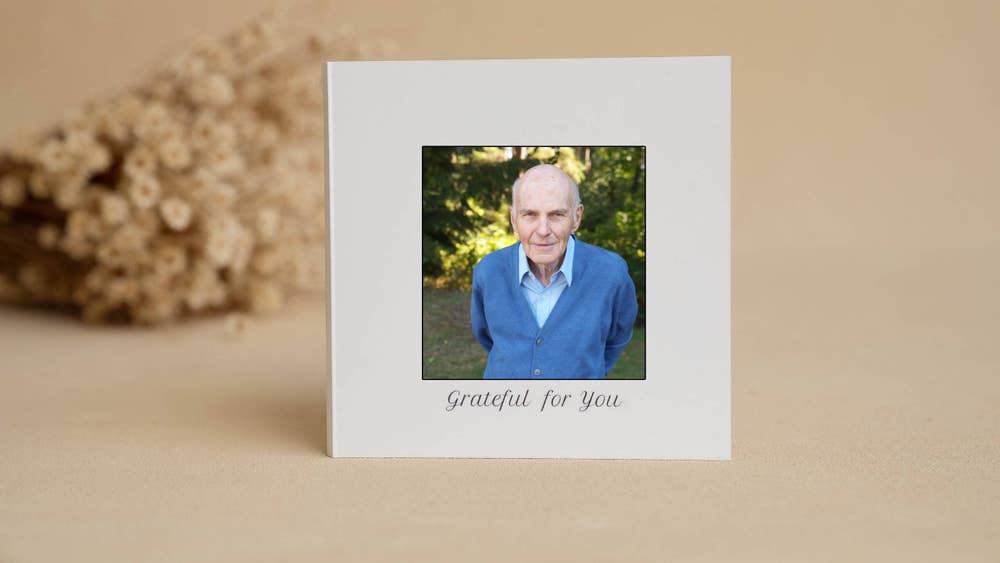
For Jody Whitelock Ewart’s family, professional portraits became far more than images on a wall. They became treasured reminders of a father, grandfather, teacher, coach, and devoted family man whose legacy continues to live on through the moments captured together.

Remembering the Man Behind the Diagnosis
Before Alzheimer’s, he was the kind of person who brought people together. A teacher and coach, he spent his life supporting others. Family was always at the center of everything he did. Whether raising his daughters alongside his wife or traveling together during retirement, he made sure his family had opportunities to experience life and create memories.
Fortunately, even as dementia progressed, much of his gentle and social personality remained intact.One of Jody’s favorite memories is captured in a simple photograph on her phone. Taken during a family gathering, it shows him wearing a “Papa Bear” shirt with a huge smile across his face. That smile perfectly reflected the man he was.
Using Photographs to Keep Memories Alive
The family was proactive long before the diagnosis. Knowing there was a history of dementia in the family, they worked to support his memory and cognitive health for years. As Alzheimer’s progressed, photographs became an important part of daily life.
“We would look at pictures like you would read storybooks to children,” his daughter recalls. “We would talk about the people in the pictures and remember the events that took place when the picture was taken.”
Family photos became conversation starters, memory prompts, and opportunities for connection.The family even transformed some of their favorite portraits into puzzles, creating an engaging activity that encouraged recognition and reminiscence.While names and details sometimes became difficult to recall, faces often remained familiar.
“Photos would show faces that he could remember were important even when he couldn’t recall the names.”
For families navigating dementia, photographs can become powerful tools for connection, helping loved ones hold onto relationships and memories for as long as possible.

The Portrait Sessions That Became Priceless
When he turned 70, the family decided to schedule a professional portrait session.The resulting images were printed, framed, and displayed throughout his home. Family members would often stop in the hallway to look at them together, sharing stories and memories sparked by the photographs.
Ten years later, they returned for another family portrait session to celebrate his 80th birthday.At the time, they simply thought the photographs would be nice to have.They had no idea how valuable they would become.“We knew they would be fun to look back at,” his daughter says. “But they became even more special as pieces of my dad slipped away.”
The portraits documented not only family relationships but also the journey itself. Looking at the images today, the family can see the changes that occurred over a decade while also seeing the joy, connection, and love that remained constant.

Why Waiting Is the Biggest Regret
One of the most common reasons families postpone portrait sessions is timing. Life gets busy. Schedules are difficult to coordinate. Someone wants to lose weight first. Another family member isn’t available. But Alzheimer’s doesn’t wait. Neither does time.Looking back, this family is grateful they prioritized the sessions when they did.
“I grow more grateful each year to have our photo sessions captured,” his daughter says. “Particularly having the two sessions ten years apart.” The portraits now serve as visual reminders of moments that might otherwise fade with time.
How Photographs Help After Loss
After her father’s passing, photographs continued to play an important role.The family chose the candid “Papa Bear” image for his death announcement because it perfectly captured who he was.“That big smile on his face showed people who he was to us.”
Today, both candid snapshots and professional portraits help preserve memories that naturally soften over time.Looking through older images allows the family to revisit joyful moments, celebrations, and everyday experiences they shared together.“There were lots of good times.”Some photographs carry more emotional weight than others, but each serves as a reminder of a memory that might otherwise be forgotten.
“The memory associated with the photo determines what it means,” she explains. “Our family photo sessions were fun, and that shows in the images and in the memories they restore.”
What Would Be Lost Without the Photos?
For families affected by Alzheimer’s, memory loss is a painful reality.Photographs help bridge that gap.“The memories fade with time,” she says. “Not having the photos as a reminder would mean the memories would eventually disappear.”
Every framed portrait, every photo album, and every snapshot becomes a physical reminder of the people we love and the experiences we’ve shared. When seen regularly, those images help refresh memories and keep stories alive for future generations.

A Message to Families: Don’t Wait
If you’re considering family portraits with a parent, grandparent, or loved one living with Alzheimer’s or dementia, the advice is simple: “Do it. Take the photos. Even if it’s hard to schedule, you will never regret it.” The perfect time rarely arrives. But every photograph taken today becomes a gift for tomorrow. And for families facing a new Alzheimer’s diagnosis, there is another important reminder:
“You aren’t alone. Reach out to dementia groups and Alzheimer’s support groups. Talk about the disease. Educate those you know. There are resources.”
Jody’s father lived well with dementia for nearly twenty years, proving that a diagnosis does not erase a person’s identity, relationships, or ability to experience meaningful moments.
Family portraits won’t stop the progression of Alzheimer’s, but they can preserve something incredibly important: the smiles, the connections, and the memories that deserve to be remembered forever.
Over 7 million Americans are currently living with Alzheimer’s/Dementia. If you would like more information you can call the Alzheimer’s Association toll free at 1-800-272-3900 or visit their website at alz.org. They offer Alzheimer care and support and are offer a free 24/7 helpline for consultations and support group information.