





Forgot Password?
Please enter your email address to receive a link for resetting your password.
Thank You
You will receive an email with further instructions. Please contact customer support if you need any further assistance.
Please verify your email address
A verification link has been sent to your email to activate your account. The link will be valid for 1 hour.
Please check the spam inbox if you can't find the email. If you still can't find it, we can resend it.
A verification link has been sent to your email 00:00

How to Sell More Wall Art to Photography Clients | 5 Tips
 Facebook
 Twitter
 LinkedIn
 Email
You spend hours creating beautiful photographs for your clients, but once you deliver the final gallery, those images often end up stored on a phone or computer and rarely seen again. For professional photographers, that’s a missed opportunity to turn great images into lasting artwork.
Selling wall art is a way to increase revenue without booking more sessions while helping clients enjoy their favorite photographs every day. The key is making it easy for them to envision how their images will look in their homes and understand the value of printed products.
You don’t need to be a pushy salesperson to increase print sales and you don’t need to be an interior decorator to know what’s best for your client. With the right approach and tools, you can make wall art a natural part of your client experience.
Start Selling Wall Art Before the Photo Session
When should you start talking to clients about wall art? Earlier than you might think! If you wait until the final gallery is delivered, clients may already feel like the experience is over. They’ve downloaded their digital files and moved on. Instead, introduce the idea of printed artwork early in the client journey.
During the initial consultation or booking process, ask clients how they’d love to display their photographs. Maybe it’s a statement portrait above the fireplace or a gallery wall in the living room. These conversations help you understand what matters to your clients while making printed artwork a natural part of your service.
Include wall-art examples in your welcome guide, client questionnaire, or pre-session emails, and let clients know you’ll help them choose the right images, sizes, and finishes.
You can create sample room mockups for your website, portfolio, or pricing guide. These examples help prospective clients understand the possibilities before they even book a session.

Help Clients Visualize Their Images on Their Walls
Imagine asking a client to spend several hundred dollars on a large framed photograph without showing them what it will look like in their home.
Many clients have difficulty visualizing print dimensions, especially when they’re viewing images on a phone or laptop. A photograph that looks impressive on a screen may feel much smaller when printed, while a large-format piece can seem intimidating without seeing it in context.
This is where wall-art mockups and the Printique Wall Design Wizard can make a significant difference.
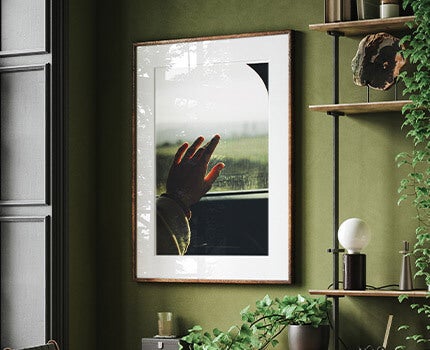
Ask your client to submit some images of the room or rooms they would like to hang their portraits. Using a photograph of the client’s room, you can create a preview showing how their favorite images might look above a sofa, along a staircase, or in a bedroom. You can also demonstrate different arrangements, sizes, and finishes of wall decor.
For example, rather than simply recommending a large family portrait, show the client how a 30 × 40-inch print could become the focal point of their living room. Then offer an alternative with three coordinated images arranged as a gallery wall.
Visuals help clients understand the finished result, making it easier for them to feel confident about their purchase. It also helps them understand size. Although a 24″x16″ portrait sounds large above the sofa, if the sofa is 84″ long, then that one portrait will look like a postage stamp in comparison.

Create Wall-Art Collections That Increase Average Order Value
Selling individual prints is one way to generate revenue, but curated collections can help clients see the value of purchasing multiple pieces together. Rather than presenting a long list of products and prices, develop a few collections that solve common decorating needs.
For example:
The Statement Piece
One large-format wall print designed to become the focal point of a room. Ideal for a favorite family portrait, wedding photograph, or individual portrait.

The Gallery Wall
Three to five coordinated prints arranged to create a cohesive display. This option works especially well for families who want to showcase multiple moments or personalities.

The Story Collection
One larger statement print paired with smaller complementary images. This gives clients a central focal point while allowing them to display additional photographs.
The Whole-Home Collection
A coordinated selection of artwork for multiple rooms, such as the living room, hallway, and bedroom. This option may appeal to clients who want to make printed photography a more prominent part of their home.
Present these collections with clear examples, dimensions, and pricing. Help clients understand what each option includes and how it might work in their space.
You can also use a good-better-best pricing structure, offering different levels of investment without making clients feel that the least expensive option is somehow inadequate.
The goal isn’t to persuade every client to purchase the largest collection. It’s to make it easy for them to choose a finished display that suits their needs and budget.

Sell the Story Behind the Photograph, Not Just the Product
A wall print isn’t simply an image on a surface. It’s a daily reminder of a person, a milestone, or a moment that matters. That emotional connection is one of the strongest reasons clients choose to invest in printed photography.
Think about the difference between showing a client a framed portrait and explaining how that photograph could become a meaningful part of their family’s home for years to come.
For a newborn session, the artwork might capture a stage that passes all too quickly. For a wedding client, it could preserve the emotion of a day they’ll want to remember long after the celebration. For a family session, it could become part of the visual history that children grow up seeing every day.
Use your marketing to tell these stories.
Share photographs of finished wall displays, with your clients’ permission. Show how a single portrait can transform an empty wall or how a gallery arrangement can bring together several meaningful moments.
You can also ask clients to share images of their finished artwork in their homes. These real-life examples help future clients imagine what they could create with their own photographs.
Avoid making clients feel guilty for choosing digital files. Instead, help them understand the unique experience of living with a printed photograph.
In a world where thousands of images can sit unseen on a phone, wall art gives meaningful photographs a place in everyday life.

Follow Up
Your relationship with a client doesn’t have to end when you deliver their gallery or complete their first print order. A thoughtful follow-up can create opportunities for additional sales while strengthening the client relationship.
Keep the communication helpful rather than pushy. You can build wall-art reminders into your broader marketing calendar. Anniversary emails, seasonal campaigns, and reminders about updating family portraits can all create natural opportunities to reconnect.
Most importantly, remember that you’re not just selling prints. You’re helping clients bring their memories into their homes.
When you make printed artwork a natural part of your client experience, you create an opportunity to increase revenue, strengthen client relationships, and build a photography business that makes the most of the work you’re already doing.