










Forgot Password?
Please enter your email address to receive a link for resetting your password.
Thank You
You will receive an email with further instructions. Please contact customer support if you need any further assistance.
Please verify your email address
A verification link has been sent to your email to activate your account. The link will be valid for 1 hour.
Please check the spam inbox if you can't find the email. If you still can't find it, we can resend it.
A verification link has been sent to your email 00:00

What Alzheimer’s Taught Me About Family Photos and Legacy
 Facebook
 Twitter
 LinkedIn
 Email
Email
June is National Alzheimer’s month. This month we are focusing on the families who have lived with it, are currently living with it, or know, that there is a pretty good chance, they’ll have it. This is my story.
“I don’t just want my children to remember milestones. I want them to remember me.”

There are certain fears that quietly live in the background of your life. For me, that fear has always been Alzheimer’s.
My grandmother had it. Years later, my mother did too. I watched both of them slowly lose pieces of themselves in ways that were heartbreaking and difficult to explain. Memories faded. Stories became fragmented. Alzheimer’s didn’t just affect memory; it changed relationships, conversations, and the way our family held onto the people we loved.
Somewhere along the way of being around my grandmother and mother with Alzheimer’s, it changed the way I look at photographs.
Watching Memories Disappear
One of the hardest parts about Alzheimer’s is how gradual it can be. At first, it’s little things like repeated questions, forgotten details,and misplaced memories. Then eventually, the changes become impossible to ignore. But even during the hardest moments, photographs sometimes created small openings back to the person we remembered.
A photo can often spark recognition and make a connection with loved ones.

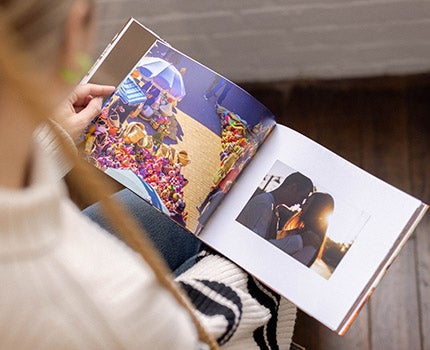
I remember sitting with my mom in throws of her condition, and looking through photobooks. There were moments when she became animated again, rememering faces and recalling pieces of childhood or moments from our family history. Sometimes the memories lasted only minutes. Sometimes they disappeared just as quickly as they came back, but those moments mattered.
The photographs became more than images. They became anchors. They reminded me that even when memory fades, emotion and connection can still exist somewhere underneath it all.
Living With the Fear of “What If?”
When Alzheimer’s exists in your family history, it changes the way you think about the future. There’s a quiet fear that follows you: What if this happens to me too? Being a mom, it made that fear feel even bigger.
I have two, young adult children, and there are moments when I look at them and wonder what they will remember about me decades from now. I wonder if one day photographs might become part of how they hold onto our story.
That thought changed the way I document our lives. I used to think photographs were mostly about milestones, birthdays, vacations, holidays, graduations. But now I find myself wanting to preserve the ordinary moments even more.
Because Alzheimer’s taught me something I never fully understood before: everyday life is fleeting too.
Get in The Frame
Here’s why being selfish, and getting in the photographs matter. I don’t have a lot of images where I was on the floor playing with the children, or supporting them on the sidelines at their events or even reading night time stories to them.
Mothers often stay behind the camera, when photographing kids. We document everyone else’s lives while quietly disappearing from the visual record ourselves. But I’ve realized how important it is to exist in these photographs, even when I don’t feel camera-ready. The only ones I have really, are the ones where we would sneak into a photo booth. I cherish these because of how silly they are and seeing how we were always a team.

Because these images are not really for me. They’re for my children.
One day, these photographs may help tell stories they’ve forgotten. They may remind them how deeply they were loved. They may become evidence of ordinary days that once felt insignificant but later became priceless. And if Alzheimer’s has taught me anything, it’s that memory is far more fragile than we want to believe.
The Emotional Power of Printed Photographs
We live in a world where thousands of images sit buried in phones and hard drives, rarely revisited.But printed photographs feel different. Physical albums get opened. Passed around. Held in your hands.They become part of family history.
That’s why I started a series of photo books, called Adventures with Mom. Over the years, they have become priceless, showing everything from our big trips, to our summer afternoons at the lake. It is something I’m proud of to make copies for each of my kids.

When I think about my grandmother and my mother, I think about the photographs we pulled out during difficult years. Not digital folders hidden in cloud storage, but actual printed images that sat in boxes and albums, waiting to reconnect us to moments that mattered.
There’s something powerful about holding a photograph in your hands when memory feels uncertain.Photographs become proof. It’s proof that someone was there during the traditions, laughter, childhoods, and love.
What I Hope My Children Will Have Someday
I don’t know what the future holds. But I do know this, I want my children to have more than scattered digital files someday. I want them to have tangible memories they can return to again and again.
I want them to remember how our home felt. What our traditions looked like. The joy, the chaos, the quiet moments in between.
And if memory ever becomes difficult for me one day, I hope these photographs will continue telling the story. Because photographs are not just pictures. Sometimes they become the bridge between generations. Sometimes they become the way we hold onto people we are terrified of losing. And sometimes, they become the memories we can no longer carry alone.
Over 7 million Americans are currently living with Alzheimer’s/Dementia. If you would like more information you can call the Alzheimer’s Association toll free at 1-800-272-3900 or visit their website at alz.org. They offer Alzheimer care and support and are offer a free 24/7 helpline for consultations and support group information.