





Forgot Password?
Please enter your email address to receive a link for resetting your password.
Thank You
You will receive an email with further instructions. Please contact customer support if you need any further assistance.
Please verify your email address
A verification link has been sent to your email to activate your account. The link will be valid for 1 hour.
Please check the spam inbox if you can't find the email. If you still can't find it, we can resend it.
A verification link has been sent to your email 00:00
 Facebook
 Twitter
 LinkedIn
 Email
Email
Some photographers capture the world. Others help people see it differently. For commercial and editorial photographer Jeff Mauritzen, photography has become a lifelong pursuit of storytelling, exploration, and curiosity. From photographing archaeological sites in Ireland early in his career to documenting some of the planet’s most remote landscapes for National Geographic, Jeff has built a remarkable body of work that spans all seven continents.
In this photographer spotlight, Jeff shares how he turned a passion for photography into a global career, the unforgettable experiences that shaped his journey, why printed photographs still matter in a digital world, and the advice he offers to photographers looking to elevate their craft.

My name is Jeff Mauritzen, and I’m a commercial and editorial photographer based in Loudoun County, Virginia, where I live with my wife, daughter, and our rescue greyhound. I work with clients both locally in the Washington, D.C. area and internationally. Much of my global work has been with National Geographic, where I’ve had the opportunity to photograph across all seven continents. Each year, I spend several months in the field as a National Geographic Photography Expert, working as a lecturer, host, and photography guide on expeditions to some of the most remote and visually compelling places in the world.
In that role, I teach photography in the field, helping travelers see more intentionally and photograph with purpose. It’s a unique intersection of the things I care most about: storytelling, exploration, and helping others grow creatively.

His Start
I’ve had a camera in my hand for as long as I can remember. Early on, it was a cheap Kodak film camera or one of my parents’ old hand-me-downs. I photographed everyday moments and made prints as a way to hold onto cherished memories with family and friends. It wasn’t until my early twenties that I started to consider turning that passion into a career. In 2005, I was living in County Kerry, Ireland, dating my future wife. I was captivated by the landscapes of Ireland and the archaeological sites scattered throughout them—some dating back nearly 6,000 years. I began photographing the natural beauty and the history embedded in the land, and eventually worked up the nerve to sell prints to the local businesses. To my surprise, they actually bought them! After moving back to the U.S., I knocked on the door of my local editorial magazine, Highlights for Children, with a print portfolio in hand. The Art Director gave me a shot—along with a few unforgettable assignments. I was asked to
photograph a tree debarked by a porcupine, ghost pipes, and yellow-bellied sapsucker holes. At the time, I didn’t know where to find any of those things—or in some cases, what they even were. But I said yes anyway and figured it out. That That experience set the tone for my career. I’ve built it by saying yes to challengges that pushed me to learn, adapt and grow as a photographer.

Most Powerful Image
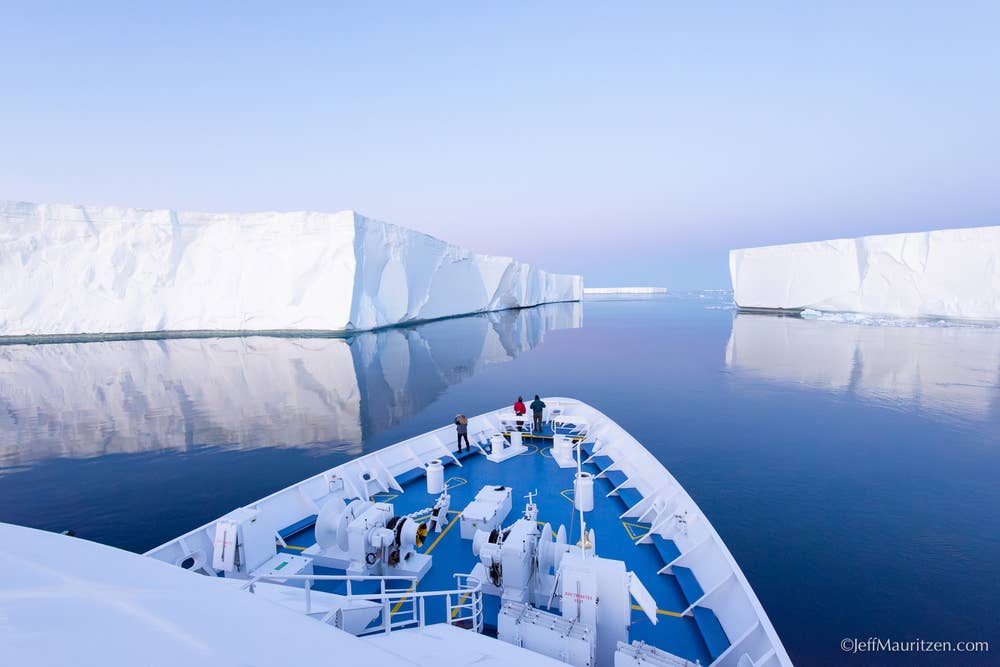
I’m not sure I can point to a single image, but my most powerful work comes from Antarctica and the subantarctic. I caught what’s often referred to as “polar fever” on my first assignment there in 2015. I emailed my boss while in Antarctica and said, “You can send me back here every year for the rest of my life.” I’ve been fortunate to have returned eight times since. Most places in the world remind you of somewhere else. Antarctica doesn’t. It stands entirely on its own—ice, light, and scale in a way that appears unreal, with out of this world wildlife encounters that only add to that feeling. One powerful moment that stands out was sailing past an iceberg at 2am as the full moon was setting behind it. The light, the moon, and the iceberg came together in a perfect composition. That image went on to be published in The Wall Street Journal and on the cover of the National Geographic | Lindblad Expeditions brochure.

Why Print is Important
As a photographer, I find it extremely gratifying to see my images in print. It means more to me to have one person buy a print because it spoke them personally, than thousand of likes of the same image on instagram. When an image is selected for print, it signals a different kind of connection with the image. Someone has not only seen it, but decided it’s worth living with rather than scrolling past. There’s a permanence to that which makes it both powerful and personal.

Advice for Inspiring Landscape Photographers
First, don’t automatically reach for the wide angle lens in the bag. I often find myself working with a telephoto lenses like the Nikon Z 70-200mm f/2.8 or even the Nikon 500mm f/5.6. I love the compression that these long lenses give –the way they draw distant background elements to combine with something interesting in the foreground creating a uniquely layered image. Second, stay curious. Curiosity is what drives you to pursue a new angle, location or technique to elevate your photography to the next level. Without it, it’s easy to fall into familiar compositions and predictable results. The growth comes from staying open to new possibilities, even when you think you’ve already mastered the scene.

What are you Working on Next
I’m really excited about what’s ahead. In August, I’ll be heading to Iceland and Greenland for another National Geographic Expedition, with the hope of photographing this year’s solar eclipse. Later this fall, I’ll travel from Tahiti to Easter Island, with stops in the remote Pitcairn Islands along the way. Looking further ahead, 2027 begins with an Antarctic expedition in January, followed by French Polynesia in February, and then a return to the Arctic in the summer. The cycle continues into 2028, when I’ll be back in Antarctica again. There’s a lot on the horizon, and I’m greatly looking forward to all of it! You can connect with me at instagram.com/jeffmauritzen and or view and buy prints photographic prints at jeffmauritzen.com.