







Forgot Password?
Please enter your email address to receive a link for resetting your password.
Thank You
You will receive an email with further instructions. Please contact customer support if you need any further assistance.
Please verify your email address
A verification link has been sent to your email to activate your account. The link will be valid for 1 hour.
Please check the spam inbox if you can't find the email. If you still can't find it, we can resend it.
A verification link has been sent to your email 00:00
Joe McNally’s Faces of Ground Zero Finds a Home 25 Years Later
 Facebook
 Twitter
 LinkedIn
 Email
Email
Twenty-five years ago, in the weeks following September 11, 2001, photographer Joe McNally stood at a crossroads familiar to many artists in moments of tragedy: How could he contribute?
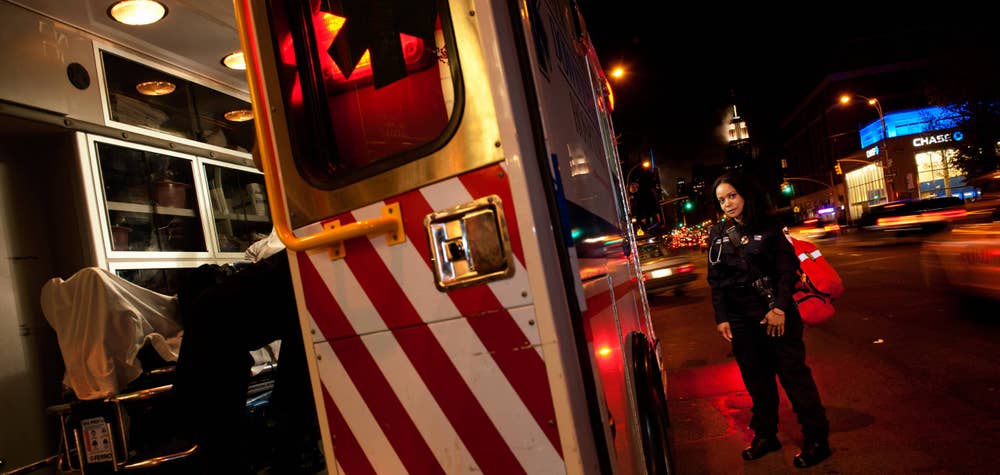
McNally is a photographer. And while countless photographers were documenting the devastation at Ground Zero, McNally wondered if there was another story that needed to be told, the story of the people who came to help.
That question became Faces of Ground Zero, an extraordinary portrait project created with what was, at the time, the world’s only giant Polaroid camera. Now, 25 years later, these powerful portraits have found a permanent home in the archives of the 9/11 Memorial & Museum, where they will continue to tell the stories of the people behind one of the most consequential events in modern history.

A Different Type of Ground Zero
In the immediate aftermath of 9/11, McNally felt there was little he could contribute by photographing the destruction itself. Other photographers were already documenting the devastation, and he believed they were doing it exceptionally well. Instead, he turned his camera toward the people whose lives had intersected with the tragedy.
“I am not a cop, nor firefighter, nor an EMT: I am a photographer. How could pictures somehow make a difference?”
For McNally, the answer was to create a space where the people who had come to Ground Zero could tell their stories. The project focused on rescue workers, firefighters, police officers, construction workers, volunteers, and others who participated in the rescue, recovery, and relief efforts. Rather than making the destruction the subject, McNally made the people the subject.

“When the disaster occurred, there were many photographers who were covering the immediacy of the destruction,” McNally explains. “And honestly, they were far better than I could have ever been at covering that type of an event.”
So he looked for another way to tell the story.
“I looked for a different way to express the stories of the people whose lives had intersected with this tragedy in significant and heartbreaking ways.”
The Camera That Asked People to Stop and Remember
The portraits of Faces of Ground Zero are difficult to forget.Part of their power comes from their scale. Some of the photographs are approximately life-size, creating an almost physical encounter between the viewer and the person portrayed. But the camera itself also played an important role.

McNally used a giant Polaroid camera, an extraordinary piece of photographic equipment that combined modern technology with traditional portrait-making techniques.
“The camera is a hybrid actually of modern camera technology: The Polaroid process plus old-time photographic portrait standards and techniques,” McNally says.
The process was slow. Subjects had to remain in darkness for 20 to 30 seconds while McNally prepared the camera and made the exposure.
“I had to work Camera Obscura and literally pull the cap off the lens of the Giant Polaroid.”

In an age when photography is often instantaneous, the process demanded patience. The person standing in front of the camera had to pause. And that pause mattered.
“I think this kind of unique instrument imparts a quietude and a dignity to the subject,” McNally says.
The resulting portraits don’t feel like snapshots. They feel like encounters.
Twenty-five Years Later
A quarter of a century has passed since McNally made these portraits. For those who lived through September 11, the photographs can bring back memories of a moment that changed their lives. For younger generations, they provide something else: a direct connection to people who experienced the events and their aftermath firsthand.

When asked whether he sees the photographs differently today, McNally says the meaning has remained remarkably consistent.
“No, not really, the meaning hasn’t changed.”
The photographs remain a record, not only of the people themselves, but of their words and experiences.
“I think the message of these photographs is to ‘never forget.’”
That message takes on even greater meaning 25 years later, as an entire generation has grown up without personal memories of September 11.
A Permanent Home for the Faces
The decision by the 9/11 Memorial & Museum to incorporate Faces of Ground Zero into its permanent archives gives the project a new life.
Photographs that began as one photographer’s attempt to contribute in the aftermath of an unimaginable tragedy will now be preserved as part of the historical record. For McNally, the museum’s role is essential.

“The 9/11 Memorial & Museum plays a crucial role in preserving memory; this preservation is their mission and they fulfill it in admirable ways.”
There is something particularly fitting about these portraits finding their permanent home there. Faces of Ground Zero was never simply about photographing an event. It was about remembering the people who lived through it, the people who ran toward the danger, helped strangers, searched through the rubble, provided comfort, and tried to bring some measure of hope to an unimaginable situation.
Twenty-five years later, their faces remain.

The Importance of the Photograph
Photography has a unique ability to preserve a moment, but the most meaningful photographs often preserve something more than time. They preserve people. That is what makes Faces of Ground Zero so powerful.
These portraits allow viewers to look directly into the faces of those who were there. They remind us that history isn’t simply made up of dates, places, and events. It is made up of individual lives and stories.
McNally set out to use his camera to make a contribution. Twenty-five years later, those photographs have become part of the permanent historical record. And perhaps that is the greatest contribution a photograph can make: to keep a face from becoming just a name, to keep a story from disappearing, and to ensure that the people behind history are never forgotten.